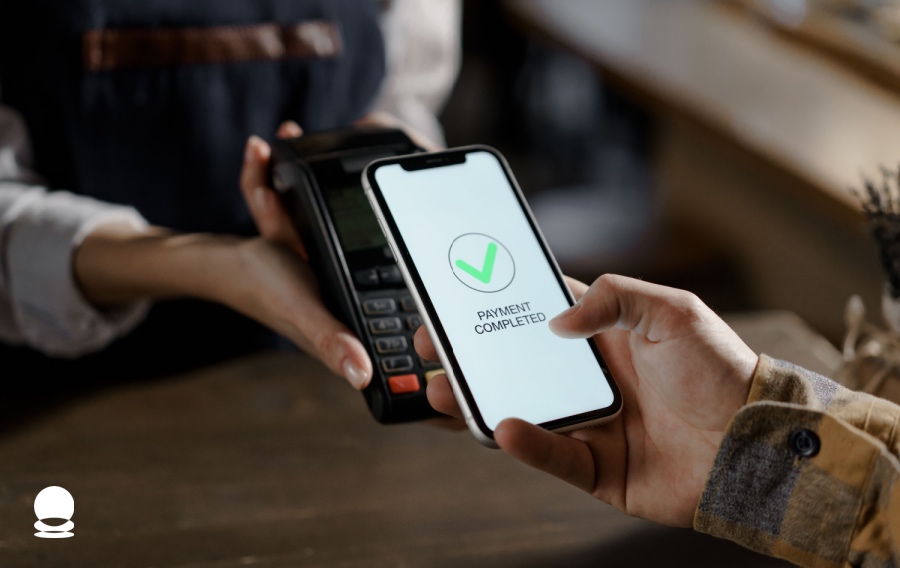
We are in an era where the spending habits of individuals from all income groups are increasingly managed through digital tools and mobile payment apps. With each passing day, the use of cash is decreasing, and all financial transactions are managed digitally. Therefore, the psychology of spending in a cashless world becomes important.
The modern financial world, where payments are entirely digital, is giving rise to some new psychological phenomena. In this new behavioral model, referred as cashless spending behavior, individuals' lack of physical contact with money leads to less control when spending, which increases the rate of impulsive purchases.
In a world where almost all financial transactions can be completed without cash, spending can sometimes be over budget. Many projects and research have shown that people are more flexible when spending through digital cards or mobile apps.
While they might be more suspicious of making the same payment with cash, the volume of unnecessary or unbudgeted spending can increase with digital payments, a phenomenon often called to be the psychology of digital payments.
Although digital financial tools provide great speed, this feature can create problems in budget management. Fortunately, many digital financial services offer solutions sensitive to people's cashless spending behaviors and offer tools that also accelerate budget management.
Join us in this blog as we explore how cashless payments affect spending decisions, invisible money effect, impulse buying, the role of notifications and alerts, budgeting psychology in digital finance, and building healthier spending habits digitally. Let’s start to dive in!
How Cashless Payments Affect Spending Decisions?
Managing payments truly through digital means without using any cash has led to crucial changes in spending decisions. Countless experiments and studies examining cashless spending behaviors have revealed the following cases:
-
-
- With cash usage, the human brain perceives the sensation of physical possession, leading to greater control over spending.
- In contactless payments, the absence of this sensation eliminates psychological barriers, increasing the odds of overspending.
- Meeting financial needs through mobile applications allows for digital control of all expenses and expenditures, offering customers with greater awareness, unlike traditional banking solutions.
- Digital financial apps give budgeting solutions such as setting periodic limits, making it easier to achieve savings accounts.
-
To explore more in detail, make sure to check out:
The “Invisible Money” Effect Explained
Recent research in the field of "cashless economy psychology" has identified a phenomenon defined as the "Invisible Money" effect, where spending doesn't feel real because there's no physical touch on banknotes.
In this effect, customers see their digitally displayed balances only as numbers and may not perceive them as their own assets. This can lead to more impulsive spending for everyone.
In this way, the brain usually takes longer to register a decrease in balance, and as research in the psychology of digital payments has proved, acquiring budget-friendly spending habits can become more difficult.
With cash usage hugely reduced, even for daily purchases, managing cashless economy psychology has become an essential necessity.
To gain this awareness, it's widely recommended to choose a reputable and trustworthy digital finance platform and to be ready for continuous learning and development to reach a level of financial literacy that decreases the impulsive spendings.
Since impulsive shopping habits can sometimes lead to issues for users' budgets, deciding platforms that prioritize personal financial management and give services aligned with this approach can be a better strategy.
Emotional Triggers Behind Digital Spending
It is quite popular for individuals using digital payment platforms to manage their spending impulsively. Beyond meeting core needs or completing periodic payments like rent or bills, “spending behavior fintech” reveals that the ability to make fast payments is abused by some emotional triggers.
The stress levels of modern life, the pursuit of rewards, and the craving for instant dopamine can, combined with prevalent impulsive tendencies and fintech tools, lead to scenarios such as overspending.
However, the solution to this problem exists in digital finance apps. Digital wallets offer budget management tools such as automatic limit setting. Customers can track their weekly or monthly expenses with visuals categorized by different categories, optimizing their next purchases smoothly and this increases users' financial awareness.
Even though digital payment tools provide great speed and complicity, this ease can lead to negative consequences in terms of budget management when misused in the bad hands of emotional triggers.
This new behavioral approach, called "impulse buying digital payments," unfortunately can turn into financial stress for uncontrolled ones. To avoid such unfortunate cases, individuals from all income levels need to prioritize their own budget management and savings accounts. Otherwise, in a world where payments can be made in just seconds, financial management can become much more challenging.

Why Do Contactless Payments Feel Easier to Use?
Contactless payment methods, one of the most commonly utilized payment methods in the modern financial ecosystem, have led to the acquisition of different contactless spending habits. Both people and companies agreed on making contactless payment services easier and more practical.
Contactless payment which allows payments to be made in seconds via mobile app or card without entering any card data, also eliminates numerous security risks. If you frequently travel to different countries and desire to make flexible purchases with different currencies, it can be recommended to explore contactless payment tools.
Impulse Buying in a One-Tap World
Nowadays, both traditional financial services and digital financial platforms provide payment methods that allow for one-touch click. While this speed provides significant efficiency for many customers, it can also become a crucial issue in combating impulsive buying.
Latest studies in various countries have examined numerous cases of impulse buying digital payments, and it has been proved that one-touch payments exacerbate these problems. In physical shopping, the feeling of giving up something with cash allows customers time to decide.
However, when payments are conducted through digital payment tools, it becomes possible to pay for even an unnecessary product or service in seconds. If you desire to minimize the impact of such impulsive buying, you should select platforms that offer budget management tools.
Spending Awareness Without Physical Cash
In online shopping, unlike physical payments, the human brain can be misled into believing the transaction is genuine because there is no physical contact with banknotes. The balance you see through digital finance applications may appear to your brain as just a series of numbers, and this misperception can increase the frequency of impulsive purchases.
In physical payments, users complete the transaction by taking cash from their wallets, creating a sense of loss and reduction in spending, unlike cashless spending behavior. This feeling motivates individuals to be more controlled in their spending.
However, when payments become completely digital and can be made in seconds, balances and budget management can become abstract concepts for individuals. Therefore, you should avoid digital finance platforms, which have a sensitive service approach in the cashless economy psychology.
The Role of Notifications and Alerts
One of the best ways to combat impulse buying digital payments is to keep notifications and spending alerts enabled on digital finance apps. Receiving notifications for transactions and payments exceeding set limits both ensures user security and increases budget awareness.
Utilizing reputable and reliable digital finance platforms that value the findings of studies in the psychology of digital payments and develop a service model based on this awareness is a crucial part of the process.
You can receive instant notifications for all transactions. Furthermore, you can receive digital spending alerts when you exceed your weekly or monthly limits. Tools that support budget management like this reduce the likelihood of disrupting your savings plans and harming your financial stability through impulsive shopping.
Budgeting Psychology in Digital Finance
In the fast-paced dynamics of the modern world, people may sometimes struggle to properly manage their budget psychology. Being in a financial network where everything can be completed quickly makes it difficult to make more controlled decisions.
Previously, purchasing a product or service required physically visiting a store and preparing payment with a credit card or cash. While these processes made the feasibility study more tiring, they also included the time needed for the human brain to make more controlled spending decisions, compared to the psychology of digital payments.
But, today, since different expense categories can be completed in seconds with a single mobile application, an extra awareness of budgeting psychology is needed. It is crucial for companies working in the spending behavior fintech field to consider users' budgeting psychology and not exploit their impulsive shopping tendencies.
As Jeton, a global digital finance platform, we offer a service model that not only allows you to make your payments and transfers quickly and securely, but also values your budget management awareness throughout the process.
How Payment Design Influences Behavior?
Some shopping platforms are designed to target people's impulsive shopping behavior, and these designs include details that prevent budgeting psychology from coming into play. Designing payment interfaces to be simpler and more intuitive can lead individuals to make faster purchasing decisions.
This design language, targeting models like contactless spending habits, which have become popular payment methods in recent years, disregards users' budget management.
However, studies in the psychology of digital payments reveal that targeting these types of impulsive tendencies by digital finance platforms and shopping sites is not ethically correct.
At this point, responsibilities fall not only on the platforms and shopping sites but also on the users. Some of these can be listed as follows:
- Ensure you choose a licensed, reputable, and reliable digital platform.
- They should enable notifications for spending above the set limits.
- Users should keep multi-factor authentication tools active.
- People should have a payment approach that suits your budget.
- They should analyze your expenses in different categories such as basic needs and luxuries.
- You should also choose mobile payment providers that offer budget management tools.
Building Healthier Spending Habits Digitally
Although digital payment options may increase the rate of impulsive shopping, it is also possible to develop healthier and more controlled spending habits. Tools offered by digital finance platforms, such as spending summaries, budget reports, overspending alerts, and balance notifications, assist maintain financial awareness.
These tools are quite useful for individuals from different income groups to manage their different cashless spending behaviors. For both more balanced and controlled spending, individuals need to be aware of their financial situation in real time.
Studies on cashless economy psychology generally show that individuals experience budget problems when they continue to spend without transparently knowing their current financial situation.
But, with today's digital finance platforms and mobile applications, it is possible to constantly update your financial awareness and avoid falling into the trap of uncontrolled impulse buying digital payments.
So, platforms like Jeton, which help maintain a high level of personal financial awareness, are becoming increasingly important in the modern world. If you desire to handle all your global and daily payments with a single touch, while simultaneously maintaining your awareness of financial management and budgeting, Jeton is here for you!
Wrapping Up
Understanding the psychology of spending in a cashless world is the first step toward reclaiming control over your financial health. As we’ve explored, the "invisible money effect" can make digital transactions feel less "real" than handing over physical cash, often leading to unplanned impulse buys.
However, the same technology that makes spending easier also provides the ultimate tools for discipline. By transitioning from passive spending to active management, you can turn the advantage and disadvantage of digital payment systems in your favor, ensuring your online payment account works for your future, not against it.
The Jeton app is designed specifically to bridge this psychological gap. By providing real-time data and immediate feedback, it brings the "pain of paying" back into the digital experience in a healthy, constructive way.
Whether you are using a Jeton Virtual Card for your monthly subscriptions or a physical Jeton Card for your daily coffee, you are equipped with the transparency needed to build lasting, mindful habits. In a world of digital payments worldwide, staying financially grounded has never been more important—or more achievable.
Benefits of Using Jeton
Are you ready to stop mindless scrolling and start mindful spending? It’s time to upgrade to the best wallet app for your global lifestyle and see the difference that real-time financial awareness can make.
- Get instant notifications for every Jeton payment, helping you visualize your spending as it happens.
- Use a virtual card for secure payments to keep your primary funds hidden and your secure online payments protected.
- Learn how to use contactless payment with ease by adding your card to your smartphone for a seamless, secure experience at any contactless payment card terminal.
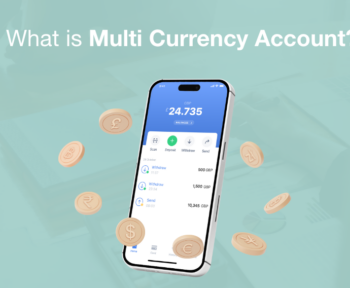
- Open a multi-currency account to track your budget across different regions without the confusion of hidden conversion fees.
- Use a prepaid card for online payments or a virtual debit card to set strict limits on your "fun money" and avoid the trap of digital impulse buying.
Download the Jeton app via the App Store or Google Play and experience the power of a truly secure debit card and multi-currency account. Sign up now easily for one app for all needs!