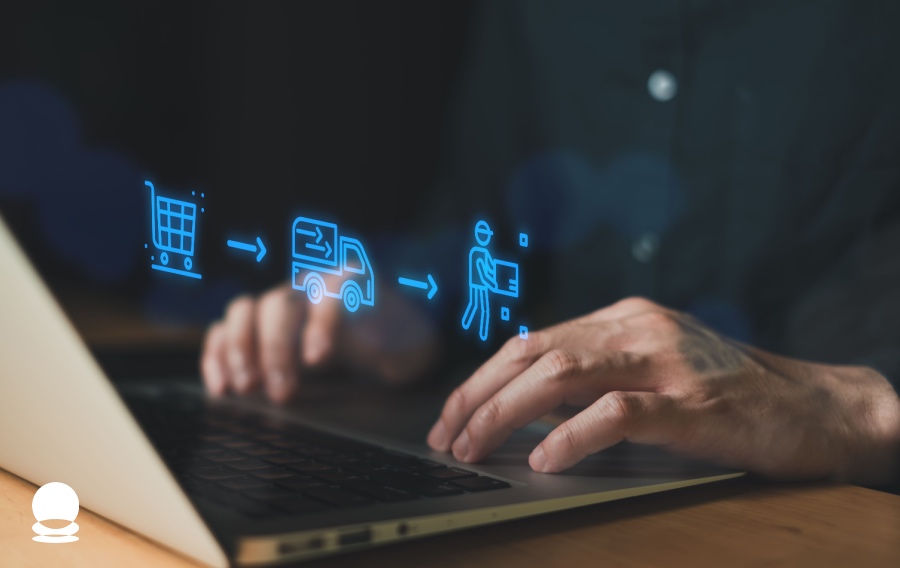
The use of blockchain technology in supply chain processes is fundamentally changing how goods are tracked, verified, and sold around the world. Many times, traditional supply chains are not very clear, are easy to cheat, and have data that is spread out.
The blockchain's unchangeable and decentralized nature makes it a strong solution to these long-standing problems. This is why global businesses are focusing on blockchain for supply chain applications.
To fully appreciate this revolutionary change, you need to know how the supply chain works and how blockchain can help with supply chain management. Join us in this guide as we look at the basic ideas behind blockchain technology and the main pros and cons of using it in supply chain operations!
What Is a Supply Chain?
A supply chain is the whole network of people, businesses, resources, activities, and technology that work together to make and sell a good or service. It includes everything from getting source materials from the supplier to the manufacturer to getting the final product to the end user.
In short, the supply chain shows how a product gets from its starting point to the end user. There are a lot of people involved in this complicated network, including suppliers of raw materials, manufacturers, logistics companies, warehouses, distributors, and retailers.
Information about the goods, such as where they came from, how many there are, and how good they are, flows through the supply chain along with the goods themselves.
It's very important to make sure that this data is correct and complete, which is where blockchain for supply chain management comes in. The strength and openness of a business's supply chain are directly related to how well it works.
What Is Supply Chain Management?
Supply chain management is the process of actively managing supply chain activities to get the most value for customers and a long-term edge over competitors. It means making sure that everyone who is involved in making, moving, and delivering a product is working together more efficiently.
Good supply chain management tries to improve logistics efficiency, keep inventory levels as low as possible, and cut down on operating costs. The main goals of supply chain management are to make sure that partners work together better, that goods arrive on time, and that products meet high quality standards.
Centralized databases and paper-based tracking are very important to traditional SCM, but they are also prone to silos and mistakes made by people. People are using blockchain for supply chain management because they want to get rid of these old weaknesses.
Blockchain offers a new way to build trust and keep data safe across the whole network. To make sure that international payments are made correctly and that every partner has a single, verifiable version of the truth about a product's journey, global trade is very complicated and requires advanced SCM techniques.
What Are the Advantages of Blockchain in the Supply Chain?
The benefits of combining blockchain technology for supply chain operations are game-changing because they fix the main problems with centralized and fragmented systems.
Blockchain for supply chain improves trust, lowers operational friction, and gives consumers unmatched transparency from source to consumer by making a shared ledger that can't be changed.
These benefits are quickly making the best blockchain for supply chain solutions more popular in many fields. The technology is decentralized, so there is no need for costly middlemen, and all parties involved can be sure that their data is safe.
This rise in verifiability and efficiency is the biggest step forward in supply chain management in decades. The main benefits of using blockchain for supply chain are:
- Every step a product takes, from getting the raw materials to selling it, is recorded as an unchangeable transaction. This gives instant, verifiable proof of the product's origin and helps with supply chain management.
- It is impossible to change data that has already been recorded on the distributed ledger, which greatly lowers the chances of fraud, counterfeiting, and disagreements between supply chain partners.
- Using smart contracts on blockchain technology for the supply chain can automate payments and complicated contracts, which cuts down on the need for paperwork and speeds up trade finance.
- Regulators and auditors can see verifiable records in real time, which makes it easier to check for compliance and show that ethical sourcing practices are being used.
- Removing duplicate data entry and reconciling between different parties speeds up the flow of goods and information, which makes supply chain management more efficient overall.
These benefits are strong reasons for companies to spend a lot of money on finding the best blockchain for supply chain uses.

What Are the Disadvantages of Blockchain in the Supply Chain?
Even though there are many benefits, using blockchain technology for supply chain operations on a large scale has a number of major practical and conceptual problems. These problems are making it harder to move from pilot projects to full-scale, industry-wide use, and they need strategic solutions for good supply chain management.
One of the biggest problems is how hard it is to coordinate several independent partners on one network. To get past these problems, a lot of money needs to be spent on infrastructure and training, and everyone in the supply chain needs to be willing to use new, standardized protocols.
The main problems with using blockchain for supply chain management are:
- It costs a lot of money to set up and integrate blockchain technology into supply chain systems. This is because software needs to be developed, hardware needs to be upgraded, and the new system needs to work with old systems.
- Some public blockchain networks that are already in use may not be able to handle the huge number of real-time transactions that big, global supply chains create, which can cause delays.
- The blockchain's ability to stay the same depends on the data that is put into it. If the physical transfer of goods is not recorded correctly at the source, the digital record will always be wrong.
- Companies and industries may use different blockchains for supply chain platforms, which makes it hard to share data easily across different networks.
- The legal status of smart contracts and decentralized governance in different countries around the world is still not clear, which could make supply chain management more risky.
What Is Blockchain in a Supply Chain Example?
Tracking high-value or highly sensitive consumer goods, like luxury items or perishable food products, is a great example of how blockchain for supply chain can be used. Let's say that a shipment of organic coffee beans is going from a farm in South America to a café in Europe.
The farmer uses blockchain technology for the supply chain and records the date of the harvest and the organic certification as the first transaction. The logistics company scans the package when the beans are packed and shipped.
The GPS location, temperature data, and time stamp are then written down in the ledger. The customs agency checks and records the approval for export. Every step, from roasting to putting the finished product on display for sale, is recorded as a block of data that all authorized users can see right away.
This is the most open way to manage a supply chain. The end user can scan a QR code on the coffee bag to check where it came from, how it got there, and that it is organic. This builds trust and justifies a higher price.
Why Is Blockchain Important for the Supply Chain?
Blockchain technology for supply chain operations are very important because they bring a new level of trust and unchangeability to a network that has always been known for being broken and unclear.
In traditional models, each party keeps its own records in separate places, which causes problems, mistakes, and long wait times for resolving disputes. The technology gives you one version of the truth that you can check.
Blockchain for supply chain is important because it can make sure that data is accurate across competing or independent groups. This shared, secure ledger does away with the need for costly, centralized middlemen whose data other partners might question.
It gives consumers and regulators real, full transparency. Here are some of the main reasons why blockchain is important for supply chain management:
- The unchangeable ledger gives each product a digital identity that can be verified, so businesses and customers can quickly check the authenticity of goods and their origin.
- Audits are easier for regulatory bodies when records are kept in real time and are open to everyone. This is especially true in industries like food and pharmaceuticals, where strict safety standards are required.
- Smart contracts can automatically release payments once conditions are met (for example, delivery is successful and quality is confirmed), which speeds up the trade finance cycle.
- Companies can show that they use ethical sourcing and sustainable practices by being open about the whole journey of a product, from raw materials to the store shelf.
- All partners in the project have access to the same verifiable data, which saves time and money that would have been spent on manually comparing different records.
This systemic efficiency changes the risk and cost profile of the whole supply chain in a big way.
What Is the Impact of Blockchain on Supply Chain Management?
The impact of blockchain technology for supply chains on supply chain management is profound, transforming it from a linear, sequential process into a connected, shared ecosystem.
The technology works like a universal operating system for data, making sure that everyone captures, shares, and uses information in the same way. Blockchain for supply chain management changes the focus of SCM from just managing logistics and inventory to managing trust and the integrity of information.
Managers can see where products are, what condition they're in (thanks to IoT integration), and who owns them in real time and without the risk of tampering. This makes forecasting and risk management much more accurate.
This level of visibility has a huge effect on managing perishable goods and complicated international shipping. Blockchain for supply chain management cuts down on manual work and administrative costs by automating verification with smart contracts.
This lets supply chain management (SCM) professionals focus on strategic tasks instead of resolving disputes and reconciling data, which makes the supply chain more flexible and responsive.

How Does Blockchain Solve Supply Chain Problems?
Blockchain technology for supply chains fixes a number of long-standing problems that have plagued global supply chain management for decades. These problems, which can be caused by mistakes or deliberate fraud, all come from the fact that there isn't one reliable data source that everyone trusts. Blockchain for supply chains fills in that missing piece of infrastructure.
The blockchain's decentralized and unchangeable nature directly solves the problem of fraud and data manipulation. Once the origin or condition of a product is recorded, no one person can change it, which gives regulators and consumers confidence in the data.
Also, the technology solves the problems of payment delays and trade disputes by automating transaction triggers. Smart contracts automatically carry out financial transfers when certain conditions are met.
Blockchain for supply chain does a good job of fixing the lack of openness, especially when it comes to claims about ethical sourcing and the environment.
The technology makes sure that claims of sustainability or fair trade can be proven, not just said, by creating an unbroken chain of custody. This makes the supply chain responsible to its stakeholders.
How Does Blockchain Reduce Supply Chain Costs?
The cost savings of using blockchain in the supply chain are directly related to getting rid of middlemen, inefficiencies, and unnecessary paperwork.
The first cost of using blockchain technology in the supply chain can be high, but the long-term savings on operational costs are huge. Finding the best blockchain for supply chain applications is mostly about cutting costs.
The technology cuts down on the need for costly third-party audits and legal services to settle data differences by providing a shared and reliable ledger. Smart contracts speed up financial processes even more because they are automated. They free up working capital faster than other methods.
Here are some of the most important ways that blockchain for supply chain lowers the costs of managing a supply chain:
- Automated data entry and reconciliation get rid of manual paperwork, which means that staff spend less time processing invoices, checking records, and settling disputes.
- The unchangeable record stops fake goods from getting into the market, which protects the brand's reputation and stops the loss of money and legal costs that come with it.
- Smart contracts automatically release funds based on verified milestones, which speeds up payment cycles and may lower interest fees that come with late invoices.
- Being able to see where goods are and what condition they're in in real time makes it easier to predict when they'll arrive and deliver them Just-In-Time (JIT), which cuts down on unnecessary warehouse and inventory costs.
- Having one verified record makes it easier for regulators to check things, which could speed up customs clearance and lower storage or demurrage fees.
These blockchain technologies that make supply chains more efficient lead to better bottom-line results. If you want to handle the safe digital payments part of the supply chain, think about using platforms that focus on financial technology.
Which Blockchain Is Best for the Supply Chain?
Finding the best blockchain for supply chain operations is very dependent on the industry, the level of privacy needed, and the number of groups involved. There is no one-size-fits-all best solution because different platforms put different features first.
For example, public blockchains for supply chain networks offer the most transparency, while private or consortium networks focus on speed and access control. People often prefer consortium blockchains, like Hyperledger Fabric or platforms built on Quorum, for big supply chain management systems.
These are permissioned networks where everyone knows who they are and can be trusted, which speeds up transactions and keeps sensitive business information private. They strike a good balance between being open to regulators and keeping secrets from competitors.
On the other hand, a public blockchain for supply chains, like Ethereum, or a layer-two solution can be used for consumer-facing traceability, like showing where ethical goods come from.
These give the end consumer the most information possible without giving up the privacy of the supply chain partners. Choosing the best blockchain for the supply chain is a strategic decision that should be based on the needs of the business.
Wrapping Up
Blockchain is transforming supply chains by bringing transparency, traceability, and trust into every stage of the process. As global supply chains become increasingly digital, secure payment flows and financial visibility are just as critical as data integrity. This is where modern payment infrastructure completes the picture.
With Jeton Wallet, businesses and professionals can manage supply-chain-related payments from a single account—adding, sending, exchanging, and organizing multiple currencies in one streamlined app.
Move money quickly and securely across Europe using 50+ payment methods in more than 25 countries, with transparent fees and fast settlement that support real-world operations.
Extend that flexibility with Jeton Card, designed for everyday and business spending alike. Make contactless payments, set spending limits, freeze or unfreeze your card instantly, and convert fiat funds with ease—keeping financial control aligned with operational needs.
Ready to support smarter, more connected global operations? Download the Jeton app via the App Store or Google Play and join 1M+ users simplifying payments in a digital-first economy. Sign up today!