The first step to getting into one of the world's biggest and most liquid financial markets is to understand forex trading. The foreign exchange market, or forex market, is the international marketplace where people and organizations exchange currencies from all over the world.
Traders can make money when prices go up or down by buying one currency and selling another in each transaction. For beginners, knowing the basics gives them confidence, clarity, and the ability to follow the rules before making their first trade.
Knowing this base also helps you avoid the mistakes that many beginners make when they first start trading currency pairs, leverage, and margin requirements. Join us in this blog as we explore Forex trading for beginners, from how currency markets work to the basics every new trader should understand before getting started.
Whether you’re learning out of curiosity or planning your first steps, having the right financial tools alongside the right knowledge makes a real difference. Let’s start with the fundamentals: history of foreign exchange market!
History of Foreign Exchange Market
The history of foreign exchange market goes back to ancient times when traders used different currencies to make it easier to do business across regions. At first, valuable things like metal coins and gems were used as the standard of value.
Eventually, paper money took the place of these, making trade easier and more portable. The Bretton Woods system fell apart in 1971, and countries switched to floating exchange rates. This was the start of the modern forex market. This change let currencies move freely based on supply and demand, which led to the decentralized and dynamic forex market we have today.
Since then, the market has grown a lot, linking millions of traders and businesses around the world. Today, the foreign exchange market is open around the clock, every day of the week, in major financial centers like Sydney, Tokyo, London, and New York.
Understanding who are the market participants in the foreign exchange market helps people who are new to the subject understand how changes in currency flow affect interest rates and the economies of other countries.
Each person has a different job to do that affects the liquidity of the market and the movement of prices.
- Central banks keep the value of currencies stable and step in when they need to to stop them from becoming too volatile.
- Institutional investors are behind big trades and risky investments.
- Retail traders make the market more liquid every day by making smaller trades.
Jeton is a trusted partner that makes it easy for traders all over the world to deposit and withdraw money. Use it to make safe and quick transactions across borders.
Forex Trading Essentials for Beginners
For people just starting out with forex trading for beginners, it's very important to learn about things like leverage, margin, and liquidity. Leverage lets traders control big positions with less money, but it can also make both gains and losses bigger.
Margin is like a loan that keeps your open positions safe, and knowing how it works can help you avoid margin calls and unexpected losses. On the other hand, liquidity makes sure you can quickly enter or exit trades without big price changes.
In order to effectively manage trade sizes, forex transactions are usually conducted in units known as lots, which indicate standard amounts of currency. Knowing what a lot in forex trading means will help you size your positions correctly.
However, mini and micro lots are available for new traders who want to take on less risk. Beginners should start with small trades, work on their discipline, and slowly make bigger trades as they learn more and become more confident.
- Learn what basic terms like spread, leverage, and margin mean.
- Before you trade with real money, try out your strategies on demo accounts.
- Position sizing and stop-loss orders are two ways to manage risk.
To develop good trading habits, you need trading platforms, educational materials, and real-time analytics. The keys to long-term success are to keep learning, be patient, and have a plan.
How Does Forex Trading Work?
In essence, forex trading is the process of trading a particular currency for another in order to make money from changes in exchange rates. A trade is made up of two currencies that are paired together.
Brokers or banks handle these trades electronically. Because the forex market is open twenty-four hours every day, five days every week, traders from all over the world can trade whenever it is most convenient for them.
Governments, businesses, and regular investors are all taking part. These forex market participants work together to keep liquidity and make sure that capital keeps moving across borders.
The 90% rule in forex is a saying that says that most new traders lose money because they trade based on their feelings and don't have a plan. To fight this, traders need to make a plan, practice often, and manage their risks correctly.
What Is a Forex Pair?
The relationship between two distinct currencies is represented by a forex pair. One currency is quoted against another, such as EUR/USD or GBP/JPY. The euro gets stronger against the dollar when the EUR/USD pair goes up. Traders use pairs to guess which currency will go up or down in value compared to the other.
- The U.S. dollar is one of the major pairs, along with the euro, the British pound, and the Japanese yen.
- Crosses, or minor pairs, don't include the dollar. Examples are EUR/GBP and AUD/NZD.
- Exotic pairs are made up of one major currency and the currency of a developing economy, like USD/TRY.
Traders can use technical or fundamental analysis to predict how these pairs will move if they know how they relate to each other in the market. When making plans, traders also think about what's going on in the world, what central banks are doing, and macroeconomic indicators.

What Are the Base and Quote Currencies?
The base currency comes first in every forex pair and stands for one unit of that currency. The quoted currency in a forex pair indicates the exchange relationship between the two currencies by representing the amount required to acquire one unit of the base currency.
Traders buy EUR/USD if they think the euro will get stronger and sell it if they think it will get weaker. This relationship helps traders figure out how to better analyze trends in exchange rates and figure out how much money they made or lost.
Knowing how exchange rates change lets you predict how they will change because of inflation, interest rate differences, or political events. These rules are very important for making good forex plans.
Jeton is a safe FinTech platform that lets you deposit and withdraw money instantly and meets international compliance standards. It can help you trade more efficiently and give you more options for payments.
What Is a Pip in Forex?
The smallest possible price movement in a currency pair is represented by a pip in forex, which in forex stands for "percentage in point" and usually indicates very slight changes in exchange rates.
For forex pairs that include the Japanese yen, however, one pip is equal to 0.01. Pips help traders figure out how much the market is moving, how volatile it is, and how much they made or lost.
For instance, the EUR/USD pair has gone up by 10 pips if it goes from 1.1000 to 1.1010. Knowing the value of a pip also helps you figure out how big your position should be and how to manage risk well.
The value of each pip in money changes depending on the lot size and the currency being traded. Traders can keep track of pips to control their exposure, figure out risk/reward ratios, and make sure their strategies are disciplined and in line with their goals.
What Is a Lot in Forex Trading?
A lot in forex trading tells you how big or small a position you open in the market is. It shows how much of a currency you are buying or selling. Most of the time, traders use three different kinds of lots:
- One standard lot is 100,000 units of the base currency.
- A mini lot is 10,000 units.
- Micro lot: 1,000 units.
The size of the lot affects both the possible profit and the risk. In a standard lot, one pip movement is worth about $10 in a USD-based pair. In a micro lot, it's only $0.10. Choosing the right lot size is very important for managing risk well.
Smaller lots lower risk, which makes them great for beginners who want to try out new strategies. Before you can figure out a pip in forex and see how profitable a position is, you need to know how to size lots.
Start trading with Jeton, which offers fast, legal, and safe payment options for forex traders all over the world!
Why Do People Trade Forex?
There are a number of reasons why both regular people and professional investors get involved in forex trading for beginners. These include the fact that it is accessible around the world, has high liquidity, and allows people to make money from price changes that happen all the time.
The forex market is different from other markets because it never closes. Trades happen all the time as markets open in Asia, Europe, and North America. This constant operation lets people respond right away to news and economic data from around the world.
Some traders use forex to make short-term bets, while others use it to invest for the long term or protect themselves from international risk. Forex is different from other financial markets in that it lets both small and large traders trade under the same conditions because it is not centralized.
Some of the main reasons people trade forex are:
-
Finding new ways to make money besides traditional investments.
-
Making the most of global economic trends.
-
Taking care of currency risk.
What Is the 90% Rule in Forex?
The 90% rule in forex shows how important it is to be disciplined and ready. It says that about 90% of traders lose 90% of their money in the first 90 days. This number isn't meant to scare you; it's meant to show how important it is to learn and have a clear plan before going into live markets.
Emotional trading, overleveraging, and not knowing enough are some of the most common reasons for these kinds of losses. In contrast, successful traders focus on strategy, discipline, and learning all the time. They don't make decisions on the spur of the moment and use risk management to protect their money.
- Make a forex trading plan and stick to it.
- Use demo accounts to get better at trading.
- Be careful with leverage and don't get too much of it.
By using Jeton, a safe and open payment platform that traders all over the world trust, you can avoid these problems and keep control of your trades.
How Do Currency Markets Work?
Currency markets work through a decentralized electronic network that connects banks, financial institutions, and individual traders. There isn't a central hub like there is on stock exchanges.
The market, on the other hand, runs 24 hours a day through an interbank system. Every transaction has a forex pair, which means that one currency is bought and another is sold. For example, if you buy EUR/USD, you are buying euros and selling U.S. dollars.
Prices change all the time because of things like economic indicators, central bank policies, inflation data, and political events. Traders look at both technical charts and news about the economy to guess which way prices will go. Liquidity makes it possible to quickly execute trades, even when the market is very volatile. However, spreads can widen during big events.
To get global payment access and instant funding, you can use Jeton. Jeton helps traders with compliant and efficient financial solutions that make transactions easier and keep trading going without interruption.
Who Are the Market Participants in the Foreign Exchange Market?
Traders can better understand how prices are affected by global forces by knowing who are the market participants in the foreign exchange market. The forex market participants include a wide range of players, each with their own goals:
- Central banks control the stability of currencies and set monetary policy.
- Banks and investment firms make money available and do big trades.
- Hedge funds and businesses keep an eye on risk and take advantage of global trends.
- Online platforms let retail traders guess about short-term price changes.
These people are always talking to each other, which makes this one of the most liquid markets in the world.
Forex is easy to get into because it is so big and available. New forex traders can figure out when volatility is likely to rise and where big price changes might happen by understanding these connections.
How to Become a Forex Trader?
To become a trader, you need to be persistent, knowledgeable, and have hands-on experience. To learn about how currencies have changed over time and why exchange rates change, start by looking at the history of foreign exchange market.
After that, learn the basics of forex trading, such as how to read charts, understand indicators, and look at economic data. You can practice in real time without putting your money at risk by opening a demo account.
Make a written trading plan that includes rules for when to buy and sell, how much risk you're willing to take, and how to keep track of your performance. Forex traders need to be able to control their emotions, too; they need to stay disciplined even when the market is volatile.
To learn more about Forex and exchange rates in general, make sure to check out:
Wrapping Up
Forex trading is all about understanding value, timing, and movement across global currencies. As you build that knowledge, managing your money efficiently becomes just as important as reading charts or following market news.
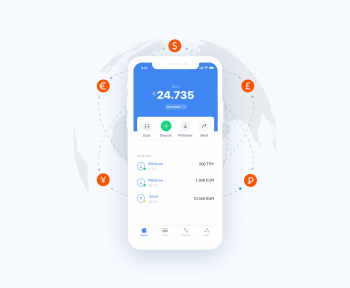
With Jeton Wallet, you can hold, add, send, and exchange multiple currencies from a single account, making it easier to organize your finances as you navigate international markets.
You can pair your Jeton Wallet with the Jeton Card to spend, transfer, or access your funds seamlessly — with contactless payments, customizable spending limits, and instant card freezing when you need it.
One app, all currencies, full control. Download the Jeton app today either via the App Store or Google Play, unify your finances, and join over 1M+ happy users who move their money across Europe quickly and securely with 50+ payment methods in more than 25 countries.
Jeton Card is your go-to for every purchase—from trading-related expenses to everyday spending. Sign up now for one app for all needs!