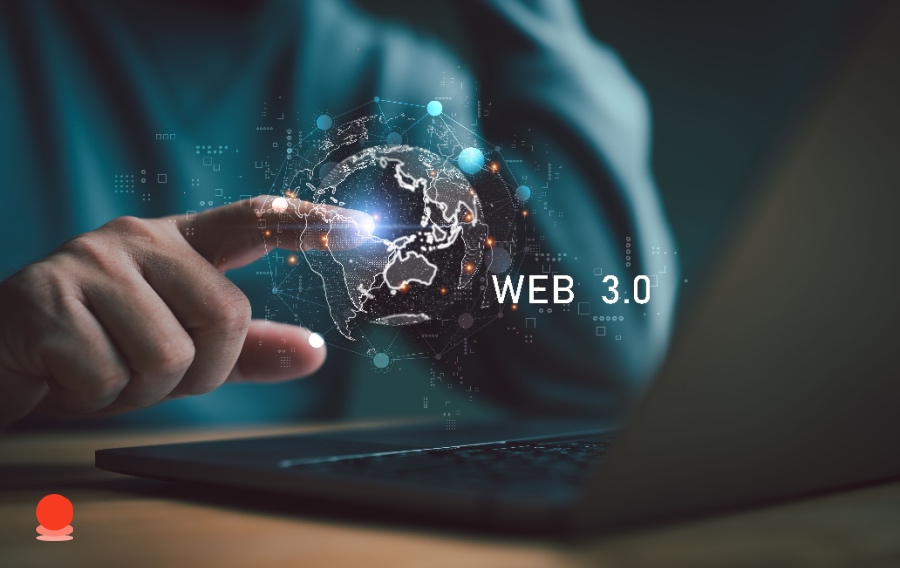
The concept behind Web3 is that it will significantly alter the internet by returning ownership and control to users rather than large corporations. You must be aware that Web3 is an evolution built on decentralized technologies, particularly Web3 and blockchain technology, in order to comprehend Web3 meaning.
Compared to earlier iterations, this new version promises a more transparent, secure, and user-centered digital experience. Web3.0 is a structural revolution that aims to alter how people own data and conduct business online, not just a faster or more aesthetically pleasing version of the Web.
This guide covers the key concepts, technologies, and implications of Web3 for the future of the digital world. Additionally, we will explore the potential global impact of Web3.0, and the kinds of investment opportunities that will exist in this new ecosystem. Let’s start!
What Is the Difference Between Web2 and Web3?
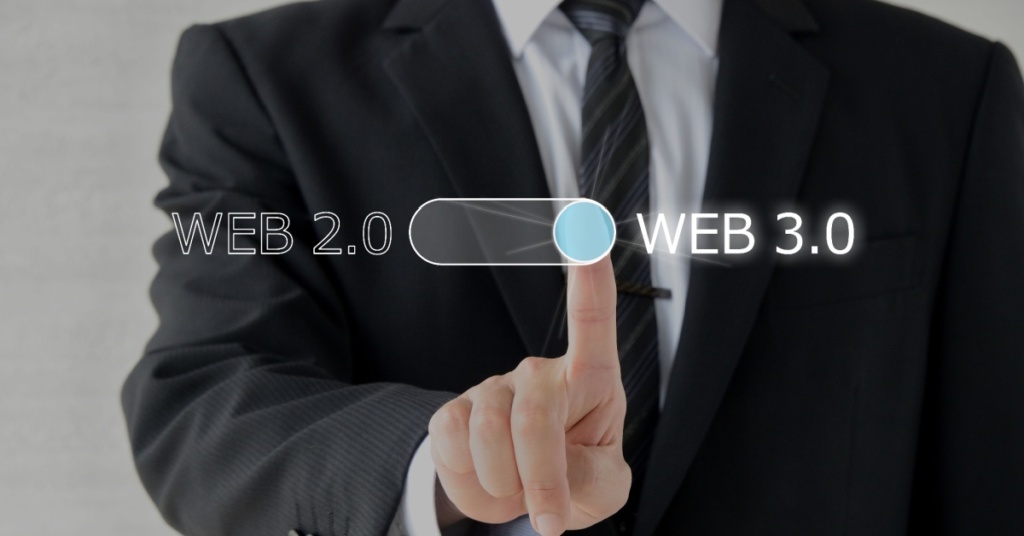
Web2 and Web3 differ in that Web3 has decentralized ownership while Web2 has centralized control. The Web2 era, which has defined the internet for the past 20 years, is the best way to understand, "What is Web3?" The read-only internet was known as Web1 in the 1990s. There was little user interaction and static Websites. The ability to read and write was added by Web2 (from the early 2000s to the present), enabling social media, blogging, and interactive platforms.
However, users do not own the data they create with Web2. Rather, large tech firms like Google and Meta control and profit from that data, resulting in power monopolies and walled gardens. In Web3, the read-write-own paradigm is novel. Based on Web3 and blockchain technology, Web3.0 is decentralized, meaning that neither the network nor the data are controlled by a single individual or organization.
Users receive cryptographic keys that enable them to truly own their identities, digital assets, and created data. Information is stored in distributed ledgers, which reduces the possibility of censorship and makes it easier to view. This shift is a move away from corporate platforms and toward community-run protocols.
What Are Web3 Technologies?
The decentralized vision of the internet is made possible by Web3 technology, a complete collection of new protocols and applications. By placing data and processing power on peer-to-peer networks, these tools ensure that apps operate independently and securely.
Web3's primary concept is to use cryptography to verify transactions and ownership without the need for central authorities. The most crucial component of Web3 technology is the blockchain. Nonetheless, the ecosystem's numerous layers cooperate to facilitate everything from data storage to transaction processing.
Web3.0 functions as a network without the need for trust or authorization thanks to these technologies. The most important parts of Web3 technology are:
- Distributed ledgers, such as Ethereum or Solana, record all transactions and state changes in a way that is unchangeable and not under the control of a single individual. Web3 and blockchain technology are based on this.
- Crypto coins and crypto tokens are digital assets that are used to manage the network, transfer value, and reward users for keeping it secure. They are the economic layer necessary for Web3 to function.
- Smart contracts are self-governing agreements whose terms are encoded directly into the code. They eliminate the need for middlemen by automating numerous tasks on the Web3 network.
- Applications built on top of the blockchain and powered by smart contracts are known as decentralized applications, or dApps. They enable decentralized social media, gaming, and other activities.
- Community-run organizations without a central leader are known as decentralized autonomous organizations, or DAOs. Web3.0 is governed by proposals and votes made by token holders.
Together, these technologies enable the Web3 promise of a secure and trustless environment to materialize.
If you want to learn more about Web3, make sure to check our other blogs!
How Does Web3 Work?
Web3 uses decentralized, public, cryptographically secure blockchain networks in place of centralized, private servers. An application uses a distributed ledger that is updated by thousands of independent nodes worldwide in place of a company-owned database. This is the reason Web3 functions.
Blockchain and Web3 technology are the first components of the mechanism. When a user makes a payment or posts data, their Web3 wallet uses their private key to digitally sign the transaction. This signed transaction is sent out by the network, and thousands of computers (nodes) use the user's public key to verify its authenticity. Once everyone is in agreement, the transaction is permanently added to the blockchain.
This system ensures that anyone can use the application without authorization (permissionless) and that the data cannot be altered (immutability). The primary reason Web3.0 is so dependable is because smart contracts execute logic automatically, ensuring that applications function as intended. The fundamental application of cryptography and decentralized consensus forms the foundation of Web3 technology.
How Does Web 3.0 Benefit Our Lives?
Web 3.0 offers genuine advantages that significantly enhance many aspects of our digital lives, making it more than just a novel technology. The primary advantage is the restoration of digital sovereignty, which implies that individuals truly own and manage their money, content, and data. This shift makes the digital economy more equitable by challenging the data monopolies that currently dominate the internet.
Anybody with an internet connection can use banking, lending, and investment services thanks to Decentralized Finance (DeFi), a Web3 financial application. This facilitates access to these services for people worldwide. Through token-gated communities and Non-Fungible Tokens (NFTs), Web3 enables content creators to earn money directly from their work. They can avoid middlemen and retain a larger portion of the money as a result.
The fact that it is more difficult to censor is another significant advantage. It is nearly impossible for a single government or business to shut down an app or censor specific content because data is stored on a distributed network. Everyone benefits from a safer, more democratic, and more stable Web3 experience as a result.
What Are the Limitations of Web3?
Although Web3.0 has a lot of potential, it is still in its infancy and has many issues that need to be resolved before the general public can use it extensively. These restrictions may be practical, such as issues with user experience and adhering to regulations, or technical, such as issues with scale and performance. Knowing these limitations is crucial to comprehending the current state of Web3 technology.
Most people find it difficult to learn how to use Web3 and blockchain technology because their underlying systems are highly complex and technical. This hinders their widespread adoption. Additionally, even though it is effective in thwarting censorship, its decentralized structure makes it more difficult to hold individuals accountable for wrongdoing.
There are currently several issues with Web3, such as:
- Many simple blockchains struggle to process transactions fast and affordably enough to meet the volume required by international applications. Long confirmation times and expensive transaction fees result from this.
- Because Web3.0 requires users to deal with private keys, gas fees, and complex interfaces, it is less user-friendly than Web2 applications.
- Globally, governments are still debating how to categorize and control digital assets and decentralized applications. Because of this, the legal landscape for business use and Web3 development is unpredictable.
- People are concerned about the future of Web3 because some older blockchains use energy-intensive consensus mechanisms like Proof-of-Work.
- Since the user owns their private keys, nobody can be contacted in the event that they are misplaced or stolen. This implies that it is frequently impossible to recover lost money.
Web3 can't reach its full potential until these problems are solved.
What Is a Web3 Wallet?
A unique piece of software called a Web3 wallet enables users to securely access the decentralized internet. Because a Web3 wallet does not store credit card information, it differs from a standard digital wallet. Rather, it keeps on the blockchain the public and private cryptographic keys required for the user to access, control, and exchange their digital assets and decentralized identity.
The Web3 wallet's primary function is to enable users to digitally sign transactions, proving their ownership of the assets without ever providing the private key to the application or the network. The core of the Web3 concept of read-write-own is this capability. A Web3 wallet is required in order to use decentralized applications (dApps). The wallet opens when a user visits a Web3 application, enabling them to sign contracts, log in, and make payments.
How Many Web3 Users Are There?
The decentralized nature of Web3 makes it challenging to estimate user numbers. This is very different from Web2 platforms. Estimates often use metrics such as unique Web3 wallet addresses, the number of active developers, and the total value locked (TVL) in decentralized applications (dApps) rather than counting individual users.
The majority of people agree that Web3.0 users are growing quickly, but they still make up a very small percentage of all internet users, despite the fact that exact numbers vary and depend on different methodological assumptions.
Tens of millions of unique active addresses, or verified users, use Web3 applications globally, according to recent estimates. Compared to Web2 platforms, which have billions of users, Web3 is still in its early stages.
But the growth pattern suggests that it will pick up speed quickly, especially as on-ramps get easier and Web3 technology's user experience gets better. This growth shows how Web3 and blockchain technology have enormous potential for widespread use in the future.
Why Is Web 3.0 Important for the Future?
Because it tackles the problems with the current internet model, which are mainly connected to censorship, data monopolies, and the absence of true data ownership, Web 3.0 is essential for the future. "Web3 meaning" refers to giving people more control over online systems and resources and digital sovereignty. Its importance stems from its potential to improve the security and equity of the digital infrastructure in the coming century.
Systems that are well-designed and resilient to single points of failure will be necessary for future global economies. Web3 provides a framework that will be essential for future social and financial transactions.
For the following primary reasons, Web3.0 is essential for the future:
- Users are able to fully own their data, content, and digital identity through the use of cryptographic keys and the Web3 wallet. This breaks the data monopolies of the Web2 behemoths.
- Since data is stored on decentralized blockchains, no one company or government has the power to block apps or censor information.
- By enabling anyone with internet access to use financial services like lending, borrowing, and stable value transfer, Web3 does away with the need for traditional banks.
- Decentralized Autonomous Organizations (DAOs) allow communities to vote on protocols using tokens. This leads to digital service governance models that are automated and transparent.
- Web3 technology enables the tokenization of assets and intellectual property (NFTs), giving creators direct access to residual payments while maintaining ownership. New economic models result from this.
This structural revolution is being propelled by the concepts of Web3 and blockchain technology.
How Will Web3 Change the World?
By altering the way money and power operate on the internet, Web3 will transform the world. The creator economy, government, and finance will undergo the most significant changes. Because of this, "What is Web3" is a question about how economies around the world are evolving. Ultimately, this will result in a more stable, straightforward, and equitable online life.
Instead of depending on institutions, the world will shift to systems where trust is ingrained in the code. Web3 and blockchain technology will make this possible. By reducing the need for jurisdictional middlemen, this shift will accelerate globalization.
The following are some ways that Web3.0 will alter the world:
- DeFi will lower the cost of international money transfers and provide essential financial services to those without bank accounts worldwide.
- Businesses will no longer be the owners of user data by default. Instead, a more equitable data economy driven by Web3 technology will result from people being compensated for allowing others to use their data.
- We will be able to plan and finance international projects in new ways thanks to DAOs and other decentralized governance structures, allowing individuals from various nations to collaborate on decision-making.
- Web3 provides us with a permanent, portable digital identity (Web3 wallet) and the means to demonstrate our ownership of virtual assets. These are both very important for a working metaverse.
- Apps will be able to connect users directly, cutting out centralized platforms that take huge fees from transactions (like ticketing, ride-sharing, and streaming), which will maximize service providers' profits.
The Web3 wallet will become the passport to the decentralized world, changing how people interact online.
Can You Invest in Web3?
Yes, you can invest in Web3 because there are many assets, companies, and protocols in the ecosystem that are open to the public. When you invest in Web3, you're really investing in the Web3 technology itself and the different apps that use it.
The native cryptocurrencies of the foundational blockchains that make up Web3.0, such as Ethereum or Solana, are the most common way to invest. These assets, which are sometimes called "layer 1" tokens, show that you own something and can use it in the network.
Another option is to buy utility tokens or governance tokens for decentralized applications (dApps) that are becoming more popular in areas like gaming, social media, and DeFi. These tokens give users and investors certain rights within the application's ecosystem. Lastly, you can put money into the stocks of regular companies or venture funds that are only interested in building the infrastructure and services for Web3 technology.
Is Web3 a Good Investment?
It's hard to say if Web3 is a good investment because it has a lot of risk and a lot of potential reward, which is common for new, disruptive technology. Web3 and blockchain technology could change the internet and the global economy in big ways.
This is a strong case for long-term investment. But because of short-term price swings and unclear rules, it's a risky area. There is a lot of competition and new ideas in the investment world of Web3.0. A lot of projects will fail, but the ones that do well could make a lot of money.
So, any money put into Web3 should be seen as high-risk capital, and it's a good idea to spread it out across different infrastructure tokens and application sectors. Some of the main risks are government crackdowns, technical flaws (hacks), failure to scale, and changes in the market. There are specialized platforms for managing investments and getting to digital finance.
Wrapping Up
Web3 is defined by decentralization and user empowerment—values that Jeton brings to your everyday wallet. While the decentralized web changes how we interact online, you still need a tangible, reliable way to navigate the physical world. Jeton serves as your personal financial bridge, offering a single account for all your payments that allows you to unify your finances without the noise of traditional banking hurdles.
- The Jeton Card is engineered to be your go-to for every purchase. It brings Web3-level efficiency to the real world, allowing for lightning-fast contactless payments wherever life takes you.
- We put the "off" switch in your pocket. Use the Jeton app for instant card freezing or to establish strict spending limits—ensuring your security is never left to chance.
- Join 1M+ happy users who bypass traditional delays. We facilitate fast and safe transactions across more than 25 countries, supported by a diverse suite of 50+ payment methods.
- Whether you’re exiting a digital position or just prepping for a trip, you can convert fiat cash easily, maintaining total liquidity across the European market.
The next generation of the internet deserves a next-generation payment partner. Why wait for the future when you can carry it with you? Download the Jeton app via the App Store or Google Play and sign up today!