Exchange rates travel can give you either the best or worse of your travelling dollar before you even leave your doorstep. Whether you're booking flights, paying for hotels, or shopping abroad, currency values shift constantly, and those changes directly influence how far your money can go.
Savvy travelers watch these swings to help their budgets go further, but getting a grasp on what makes them tick is the first step. From secret fees to unpredictability in the market, how you deal with travel money exchange has a role in whether you come out cash-strapped or cash-rich.
With the convenience of digital wallets making conversions easier and real-time alerts enabling users to secure the best rates, there’s no better time to travel. Savvy tourists know that timing currency conversions and selecting the appropriate payment options can save them hundreds or even thousands of dollars on a single vacation.
From hidden currency conversion fees to the dangers of exchanging travel money at the last minute, little mistakes can mean big losses. This guide will teach you how to pay smarter, how to effectively track rates, and how to hold on to more of your hard-earned money where it belongs: In your pocket.
Join us in this blog as we explore how to get around currency conversion fees, when to time your transactions, and how to avoid expensive mistakes so your next adventure stays on budget. Let’s start by understanding exchange rates!
Understanding Exchange Rates
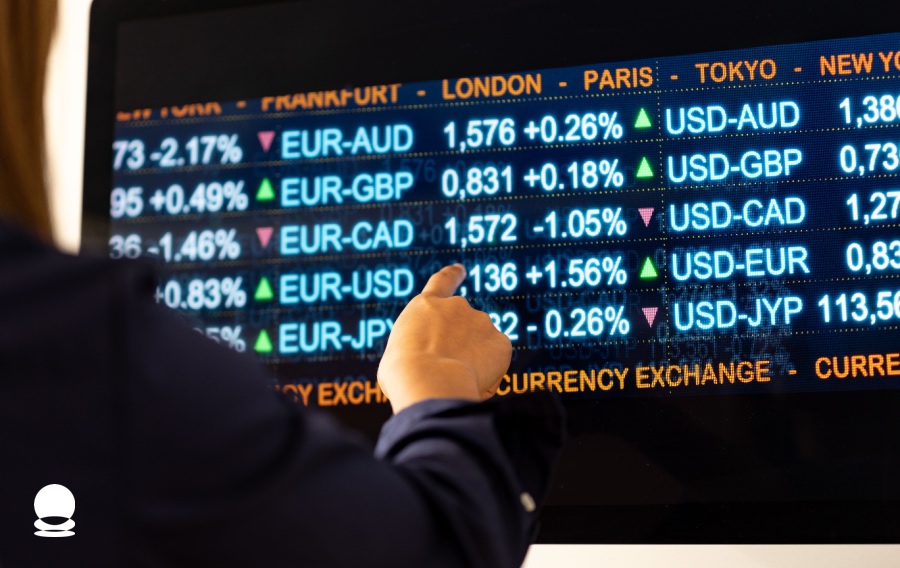
Exchange rates tell you how much one currency is worth in another one. If the U.S. dollar strengthens against the euro, your travel budget exchange rates suddenly buy more in Paris. But a weakened dollar eats away at that same budget. These rates do fluctuate; they change according to economic data, political events, and international demand.
For travelers, the challenge is to understand what is the mid-market rate (the real rate your bank uses) and the rate you are getting. Banks, airports and even some websites apply markups that increase the price by anywhere from 3% to 5%. When you use a transparent service such as Jeton, you can check the actual rates before you convert, meaning there won't be any hidden surprises.
Spot Rates vs. Tourist Rates
- Spot rate: The current market rate for large transactions.
- Tourist rate: Usually worse, with higher fees on currency conversion.
Always check rates before exchanging. A difference of 0.01 in the rate might seem trivial, but it can cost you an extra $20 if you're converting $2,000.
Why Rates Change Constantly
FX impacts travel more than most people realize. Rates are changing because:
- Economic indicators: Interest rates, inflation figures and employment data all influence currencies. A solid U.S. jobs report would help the dollar and help make European vacations less expensive for Americans.
- Political stability: Elections, trade wars, or crises introduce volatility. Sudden drops in a currency’s value can erase your travel budget exchange rates overnight.
- Market sentiment: Traders respond to news, including rumors, and a market can move quickly. Natural disasters or pandemics also interrupt rates.
How to Keep Track of Changes
- Get rate alerts.
- Pay attention to financial news for big economic releases.
- Don’t trade during periods of high volatility (e.g., just after a meeting of a central bank).
If you’re traveling soon, convert a portion of your money now to guard against any sudden declines.
Budgeting for Currency Fluctuations
Subsequently, an uncertain exchange rate means that your $3000 budget might get shrunk to $2800 to spend if the dollar deteriorates. Here’s how to plan:
Estimate Your Biggest Costs in Local Currency
Calculate major expenses (hotels, tours, flights) into the destination’s currency based on the current rate. Then add a 5-10% buffer for fluctuations.
Diversify Your Payment Methods
- Digital wallets: Jeton allows you to keep hold of different currencies, switching between them without the need to repeatedly convert.
- Prepaid travel cards: Load them when rates are favorable and lock in value.
- Local cash: Make small ATM withdrawals abroad (do check for any fees related to currency conversion, first).
Observe Historical Patterns
Use FX websites to find out how rates were trending in the last year. If the dollar strengthens over Dec historically, wait to exchange until then.
Example: Are you planning a trip to Japan? If the yen depreciates by 5% before you leave, that means your travel money just became more expensive. Keeping an eye on trends over time will give you an idea whether you should exchange now or later.
Exchange Rate Markups Explained
Banks and bureaus rarely sell the mid-market rate. They simply add a markup, which may be disguised as a “service fee” or a “commission.” This is where you lose money:
- Airport kiosks: Good for convenience but at a cost, with markups of as much as 10 percent.
- Credit cards: Some (many) charge a 1-3% foreign transaction fee in addition to a terrible exchange rate.
- ATMs abroad: May offer dynamic currency conversion (DCC), which means the machine chooses the exchange rate (always say no to DCC).
How to Avoid Overpaying
- Get a multi-currency digital wallet: Jeton shows the actual rate and the fee beforehand, so you know what you’ll be paying.
- Withdraw local currency from an ATM: To skip DCC, opt to be charged in local currency (not USD).
- Compare options: A 1% difference on $1,000 is $10 saved; sufficient for a good dinner in a foreign country.
Some “fee-free” services hide costs in worse exchange rates. Make sure to check the full amount you can get.
Timing Your Currency Conversions
Timing is everything when managing exchange rates. A little know-how about timing can save you a hundred dollars on travel money exchange. Follow these strategies:
Exchange When Rates Are Good
- Set alerts for your target rate (ex. 1 USD=0.85 EUR).
- If it gets there, convert some; don’t hold out for going even higher.
Don't Wait Until the Last Minute to Exchange
They are the least favorable rates of all, offered by airport kiosks and hotel desks. Convert at least a week in advance with a reliable platform.
Split Large Conversions
Rather than waiting for the rate to move in your favor, break your currency exchange into fractions, so you can average out the rate fluctuations.
Take Advantage of Loyalty Schemes
Some digital wallets, like Jeton, reward frequent users with better FX rates or cashback. Those are the kind of perks that compound if you frequently need to exchange rates.
Take for example a traveler who exchanges $1,500 for euros at the airport and receives €1,200, but who could have gotten €1,265 using www.jeton.com’s mid-market rate. That’s an extra €65 for souvenirs.
Final Tips for Smarter Travel Spending
- Always double-check the rates before converting, even if the difference is just 0.5%.
- Use tools that have low fees: Digital wallets usually have lower currency conversion fees than banks.
- Keep an eye on political/economic news: A sudden rate fall could throw your travel budget exchange rates out of whack.
- Backup payment options: A prepaid card (such as www.jeton.com's Visa) makes sure you are never left without money.
- Say no to dynamic currency conversion: Pay in local currency when asked.
Exchange rates travel need not be a mystery. With the right know-how and timing, you can profit from currency fluctuations and end up with more money for experiences, not fees.
Paying Locally vs. Pre-Conversion
One of the most common quandaries among travelers is whether to exchange money before leaving home or pay in the local currency when you travel. Each has advantages and disadvantages, but the most important thing is to understand how the FX will impact travel costs for each.
Pre-Converting Cash: Convenience vs. Risk
Converting currency at home feels safer, but airport currency exchange booths and banks will often charge exorbitant currency conversion fees upward of 5% in some cases. If you must carry cash, compare rates online first and avoid last-minute conversions. Some digital wallets, such as Jeton, allow you to store multiple currencies, enabling you to take advantage of favorable rates in advance.
Paying Locally: Dynamic Pricing Pitfalls
It's effortless to use a credit card abroad, but you could be hit with unfavorable exchange rates and travel markups from merchants and banks. Always choose to pay in the local currency (not your home one) to avoid the “dynamic currency conversion” charges. For instance, a $100 transaction would be $105 if the terminal does the conversion.
You can load funds at better rates with a prepaid travel card (such as Jeton’s Visa option) and spend without any surprise fees.
Card Payments and FX Fees
Not all cards handle travel money exchange equally. Some add hidden markups, while others offer near-interbank rates. Here are the tips when you need to find out the best one and stay away from the worst one.
Foreign Transaction Fees
Most cards (credit or debit) charge 1-3% on each transaction made abroad. Over a two-week trip, these currency conversion fees can drain $50-$200 from your travel budget exchange rates without you noticing. Always check your card's terms before traveling.
Prepaid and Virtual Cards
Prepaid cards (including www.jeton.com cards) usually come with smaller FX markups and without foreign transaction charges. Virtual cards provide added protection by issuing different numbers for each transaction for online reservations, minimizing the potential for fraud. Top them up when rates are good, then spend without worrying about daily changes.
Case in point: if the euro appreciates suddenly, you're protected from the last-minute impact of FX on your travel budget, since a prepaid card locks in your rate.
Tools to Monitor Exchange Rates
Managing exchange rates is a matter of timing. Even a 2% swing could add $20 to a $1,000 conversion. Thankfully, there are currencies for the currencies to you can watch and act on movements in the rates.
Rate Alerts
Services such as Jeton’s FX alerts advise you when the rate that you have set is reached, so you don’t have to be in the dark any longer. Enter alerts for multiple currencies and receive daily updates if needed. Note: great for traveling for exchange rate budget planning; buy when rates are low, not when you’re desperate at the airport.
Multi-Currency Wallets
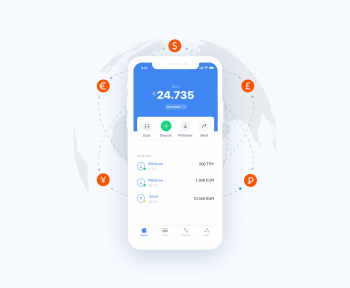
Digital wallets also allow you to hold funds in various currencies, so that you exchange only when the rates are in your favor. When you head to Europe and Asia, for example, bring euros and yen in your wallet and use whichever you need. That helps to keep the fees from converting the currency down over time.
Avoid: Keep repeating the process with tiny amounts. Consolidate your conversions and the fees.
Reducing Losses While Traveling
Every person loses at least a little money to exchange rates and to travel; but if you follow a few key principals, you can significantly reduce those losses.
Stay Away from Airports and Hotels for Exchanges
They have the worst rates, topped off with a 10%+ markup. Use instead the ATMs (find partner banks to avoid fees) or take out a bigger amount once in a while. Some digital wallets also allow you to withdraw to local bank accounts right away, eliminating the middleman.
Split Payments Between Cash and Card
Bring a combination of already converted cash (for small vendors) and a credit card with low foreign transaction fees (for big purchases). This is a balance of convenience and cost efficiency. For example:
- Pay cash for taxis and street market purchases.
- With a prepaid card for the hotel and tours, no more surprises from exchanging your travel money.
Redeem Loyalty Points for Better Rates
Platforms similar to www.jeton.com such as rewarding you for transactions, including currency conversions. Collect points with every purchase and redeem them for discounts or even free conversions. Eventually, this balances off the currency conversion fees and you get more value from your money.
Smarter Currency Management Tips
Exchange rates travel isn’t only about saving on fees; it’s also about getting the most value. These playing fields are leveled up strategies to help you stretch your dollars even further.
Hedge Against Volatility
If you’re traveling to a place where the currency isn’t stable (e.g., Argentina or Turkey), you might want to exchange some of your money early. Digital wallets hold multiple currencies, allowing travelers to diversify and mitigate FX impact travel risks.
Use Peer-to-Peer Exchanges for Better Rates
Such platforms that match travelers (such as swapping dollars for euros with another traveler) tend to have rates that are nearer to the interbank rate. Although not as immediate as a digital wallet, this can save you 2-4% on large exchanges.
Plan for Leftovers
Never get stuck with unwanted foreign money. Before you end your trip:
- Spend remaining local currency on souvenirs or meals.
- Convert back via a low fee service (some of the wallets now allow you to convert back at the airport with better rates).
- Hold on to small bills for your next trip. Some currencies (such as the Thai baht) keep its value well.
Follow Historical Trends
Forex sites plot how the exchange rates have fluctuated over time. If you notice a trend (like the pound getting weaker in summer), plan your conversions accordingly.
Wrapping Up
The key to a successful trip lies in how well you manage the variables you can control. While you cannot dictate global market shifts, being prepared and adaptable allows you to transform exchange rates travel challenges into financial advantages.
Travel exchange rates cannot strictly be considered deceitful; with the right payment options, a little proactive watching of the rates, and by not falling into a few traps, you can keep hold of a little more cash to enjoy rather than pay out.
Whether you’re backpacking across Southeast Asia or sipping espresso in Paris, you can make sure your next adventure, and specifically exchange rates, work for you rather than against you.
Jeton finance is your ultimate travel companion, designed to keep your budget intact regardless of where you land. With our multi-currency wallet account, you can hold and exchange various currencies when the rates are in your favor, avoiding the stress of sudden fluctuations.
Use your Jeton Card for seamless spending at local merchants or rely on the Jeton Virtual Card for secure online bookings without hidden currency conversion fees. Don't let unpredictable markets dictate your adventure.
Download the Jeton app via the App Store or Google Play, easily sign up, open your multi-currency account, and start traveling smarter with the versatile digital wallet with one app for all needs!