A thorough examination of the cultural and economic elements that influence people's financial management is necessary to comprehend the various payment preferences across Europe.
At the moment, residents of payment preferences Europe are getting used to a more integrated and technologically advanced environment. Even though the European Union wants a single, unified market, the tech-driven streets of Stockholm and the traditional markets of Athens show very different consumer behavior.
Even though many everyday interactions are still controlled by antiquated processes, legacy systems are being drastically modernized in response to the need for increased transparency and faster processing.
In order to successfully deliver efficient financial services, global fintech innovations must adjust to local expectations and regional infrastructures due to this fragmentation, resulting in a distinct landscape.
This change ensures that consumers and businesses can participate in a more effective economy where geographical distance does not impede financial fluidity. Understanding these shifts is essential for anyone looking to optimize their financial management, whether personal or professional, in the diverse European market.
In addition to making payments easier, using digital tools provides more thorough data regarding spending trends and budget management. Join us in this blog as we explore these shifting trends and discover how to easily navigate the diverse financial landscape of the continent.
How Payment Habits Differ Across Europe
A complex history of banking development and consumer behavior across the various member states is reflected in the variety of European payment methods that are currently available.
Global credit card networks have essentially taken the majority of the retail market share in some countries, while local debit schemes continue to be the dominant force in others. Because of these variations, companies operating overseas need to be ready to accept a variety of local options in order to keep clients at the point of sale.
- Bank transfers and local card programs that put an emphasis on direct control and data privacy have long been very popular in Germany.
- A near-cashless society, where virtually all transactions are made online, is rapidly approaching in the UK and the Nordic nations.
- Mobile banking apps that completely circumvent traditional card infrastructure to enable quicker settlements are growing in popularity in Central and Eastern European markets.
As e-commerce has become more popular, customers expect smooth transitions between their mobile devices and in-store interactions, which has further complicated these behaviors.
Merchants are adopting adaptable platforms that can manage various currencies and local settlement regulations without unduly complicating things for customers in an effort to remain competitive.
Card Payments vs. Digital Wallets
Nearing a tipping point in the conflict between traditional plastic and digital wallets Europe is the widespread use of smartphones across nearly every demographic group.
Although cards still offer a familiar physical experience, digital wallets provide an extra layer of security through tokenization, which ensures that actual card details are never shared.
This technological advantage will be particularly appealing to younger generations, who place a high value on speed and security when using mobile applications for services or shopping online.
- You can keep multiple payment methods, including loyalty cards and boarding passes, in one convenient location with digital wallets.
- Biometric authentication methods, such as fingerprint and facial recognition, can quickly and securely replace traditional four-digit PIN codes.
- With the help of spending analytics and real-time notifications, users can better manage their finances and budget throughout the month.
The integration of these mobile wallets into the broader retail ecosystem is making it easier for people to stop using their physical wallets at home. As mobile payment infrastructure develops, card usage is likely to continue to decline because carrying everything on a phone is so convenient.
Cash Usage Trends by Country
The analysis of cash vs card Europe data reveals an intriguing divide between countries that view cash as a privacy tool and those that view it as a nuisance. In countries like Italy and Greece, where it is used for everything from small coffee orders to large home repairs, cash remains a vital part of society.
However, in Norway and Denmark, cash is becoming so rare that some businesses have completely stopped accepting it in favor of more effective digital logs. The importance of having inclusive financial systems that do not exclude less tech-savvy population segments is highlighted by this geographic disparity.
The desire to devalue physical currency and the need to ensure that everyone has enough money to pay for necessities often clash. As a result, the transition from paper money must be gradual, respect regional traditions, and offer clear benefits for moving to digital alternatives.
The long-term trend shows that even the most cash-reliant cultures are gradually beginning to adopt digital tools due to their transparency and ease of use. As more small vendors adopt mobile point-of-sale systems, barriers to accepting cards and wallets are decreasing, even in remote rural areas. Many frequent travelers find that using a digital wallet allows them to manage their spending without carrying cash.
The Role of Regulation in Payments
One of the main drivers of cross-border payments Europe innovation has been strict regulations that ensure all participants follow the same security standards.
Initiatives such as the Payment Services Directive have opened the market to third-party providers, increasing competition and lowering costs for the average consumer. Whether you are sending money overseas or domestically, this regulatory framework ensures that it is protected by consistent legal safeguards.
Regulatory agencies are also focusing on the environmental impact of financial systems and are advocating for more ecologically friendly ways to record and process transactions.
To meet broader global targets for reducing waste and carbon emissions, the financial sector is advocating for digital-first banking and paperless billing. This change improves the overall effectiveness of the banking network while also helping the environment by doing away with the need for physical transportation and storage.
In order to ensure that customers are always aware of the exact costs connected with each service, European regulators continue to place a high priority on transparency. This clarity promotes trust in emerging technologies while assisting users in selecting the financial tools that best suit their needs and way of life.
Contactless Adoption Across Regions
The quick growth of contactless payments Europe has drastically changed the shopping experience by cutting down on the amount of time spent at the register.
Now that almost all terminals support tap-to-pay for cards and mobile devices, what was once a novelty has become the norm. In public transportation systems, where speed is crucial for getting lots of people through gates and onto cars, this technology has proven especially helpful.
Although adoption rates of contactless payment vary by region, there is a general upward trend as more people become aware of the convenient and hygienic advantages of touchless transactions.
Customers can now purchase more expensive goods without entering a PIN thanks to banks and fintech companies raising the limits for contactless transactions. Consumer habits are being permanently changed by this ease of use, and these changes are probably going to last long after the initial technological shift is over.
Cross-Border Payments Within Europe
Since efficiency makes it easier to exchange goods and services, it is crucial to the modern single market. Because digital wallets offer quicker settlement times and cheaper fees than traditional bank-to-bank wire transfers, they have become indispensable in this process.
This eliminates the usual delays associated with outdated banking networks and allows independent contractors and small businesses to receive cross-border payments Europe.
- Because digital platforms cut out needless middlemen, end users benefit from lower transaction costs and more equitable exchange rates.
- Both the sender and the recipient can check the status of a payment at any time thanks to real-time tracking features.
- For individual customers, the complexity of international trade is made simpler by the ability to hold and manage multiple currencies in a single account.
Transfers that used to take days are now finished in seconds thanks to these sophisticated tools, creating a more interconnected economic environment. Users can overcome the regional restrictions that formerly prevented the expansion of remote work and e-commerce across the continent by leveraging global infrastructure.
Trust and Security Expectations
The variety of European payment methods that is currently on the market needs to adhere to very strict security standards in order to keep consumers' trust in the digital age. These days, any platform that handles sensitive financial data must have tokenization, biometric authentication, and encryption.
Compared to conventional physical cards, these multi-layered security frameworks offer a safer environment by shielding users from fraud and unauthorized access.
Customers now anticipate timely mobile alerts for any unusual activity along with real-time account monitoring. This transparency greatly lessens the possible impact of theft by enabling people to act right away if they find a charge they did not authorize.
Furthermore, users have a degree of control over their money that was just not achievable with physical cash thanks to the ability to remotely lock or unlock a payment account.
Open and honest communication regarding costs and how personal data is handled at all times also helps to build trust. More people are likely to switch from outdated systems to contemporary digital solutions when a platform exhibits a dedication to security and transparency.
Mobile Payments Growth
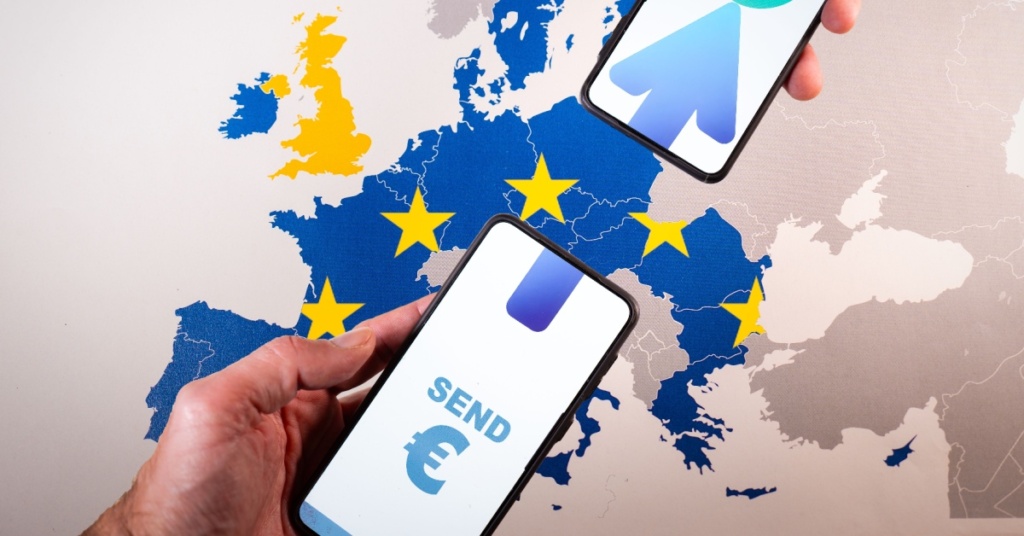
The ease of having all financial tools in one smartphone app is currently driving digital wallets Europe's growth. The need for a physical wallet is essentially eliminated because users can store various card types, membership details, and even transit passes in one place.
This consolidation guarantees that all required tools are available when a payment is due and makes it simpler to keep track of spending.
- Automatic expense classification significantly streamlines the process of sticking to a monthly budget by assisting users in understanding where their money is going.
- Integrated loyalty programs eliminate the need for additional plastic cards by enabling customers to automatically earn and redeem rewards at the point of sale.
- Sophisticated dashboards guarantee that nothing is overlooked during a hectic day by offering a comprehensive summary of all financial activity across numerous accounts.
Because digital receipts and the ability to set reminders for upcoming bills are both accessible through the same interface, the end result is a more organized financial life. As it offers a consistent experience regardless of their physical location, this change is especially advantageous for people who travel or shop online frequently.
Cultural Influences on Payment Choices
It is evident from comparing cash vs card Europe statistics that cultural perspectives on debt and privacy have a big impact on how people pay their bills. Physical currency has long been preferred in some locations, particularly for local markets, tiny cafes, and various transit options.
Since not all small vendors in these areas are prepared to handle digital transactions, some cash is still considered necessary for day-to-day living. However, both urban areas and younger populations are quickly approaching a time when physical currency is rarely used for anything other than minor emergencies.
More and more people who value speed and efficiency in their daily routines have made digital options their default because tap-and-go systems are so convenient. The government's objective of encouraging more transparent financial systems that are simpler to oversee and regulate frequently supports this cultural shift.
Notwithstanding these variations, a more adaptable mindset is becoming more prevalent throughout the continent, with people always carrying cash and a card to deal with any circumstance.
By enabling users to safely store the majority of their money online and take out local currency from ATMs when necessary, digital platforms aid in closing this gap.
What’s Next for European Payments
The creation of sustainable financial practices and further integration with common devices are probably going to be the main goals for contactless payments Europe in the future.
In addition to making life easier for the user, reducing the use of physical plastic cards also helps the financial industry's environmental impact. Paperless communication and the use of energy-efficient data centers are becoming commonplace components of the growing green finance movement.
Inclusivity will become a key theme as new technologies remove the historical barriers that kept some people from using official banking services. Regardless of whether they have a traditional bank account or not, anyone with an internet connection can use mobile platforms to engage in the global economy.
Small business owners, independent contractors, and remote workers can now safely handle their finances and get paid thanks to the democratization of finance.
Wrapping Up
Learning to navigate the diverse payment preferences across Europe is all about finding a balance between local habits and modern convenience. By choosing a system that adapts to regional networks while offering top-tier security, you can travel, work, or run a business across borders.
Ultimately, managing your European finances does not have to be complicated, it just takes a tool that speaks the local language of payments. Jeton bridges these regional gaps perfectly, making it easy for anyone to adapt to changing payment habits.
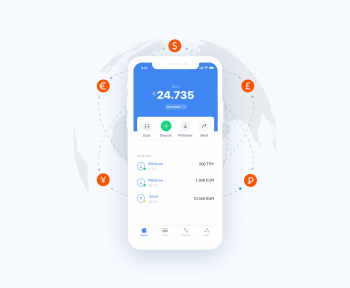
Trusted by over 1 million users, our platform helps you seamlessly manage more than 25 currencies under a single multi-currency account. To ensure you can pay or get paid anywhere on the continent, Jeton connects you with over 50 payment methods across Europe.
Whether you are using a physical Jeton Card for daily card-friendly checkouts or creating a secure Jeton Virtual Card for online transactions, your money stays flexible and fully under your control.
If you are ready to simplify your European transactions, download the Jeton app via the App Store or Google Play, sign up and open your multi-currency account, and enjoy a truly integrated financial experience with one app for all needs!